
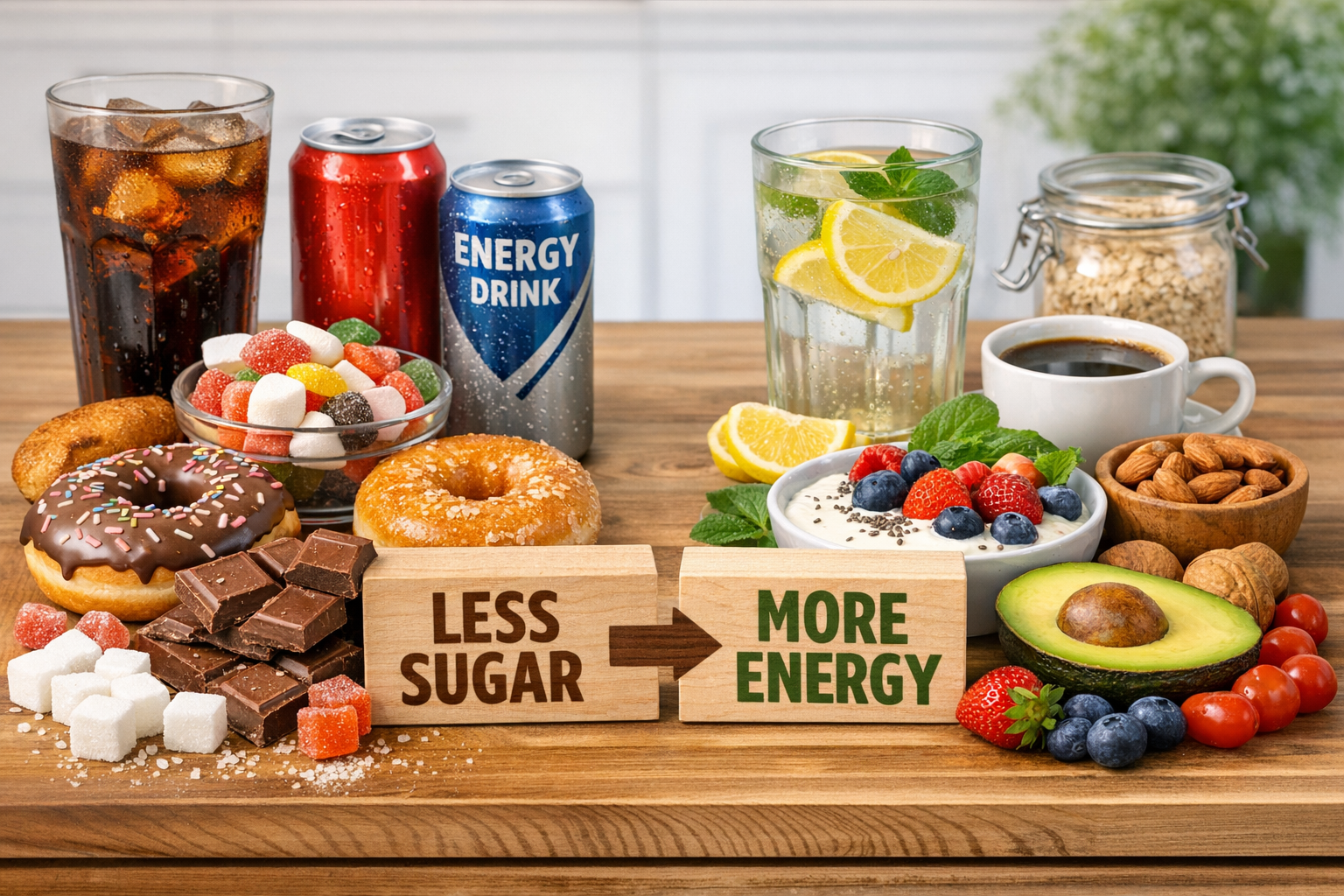
Have you ever heard someone say, “I need a little something to have more energy throughout the day”? In most cases, that “little something” ends up being something sweet—a sugary coffee, a soda, an energy drink, or a snack loaded with refined sugar. It feels like a quick and simple solution: you eat or drink something sweet and, almost instantly, you feel more awake, focused, and able to keep going. On the surface, it seems perfectly logical to associate sugar with energy.
But this is where a major paradox emerges.
Here’s the paradox: while sugar does provide quick energy, it is precisely this rapid spike in blood glucose that leads to the dreaded energy crash, leaving you more exhausted than before. The result? A vicious cycle where you reach for more sugar to combat fatigue, unintentionally reinforcing the very problem you are trying to solve. Over time, your body begins to rely on these repeated sugar boosts, and what once felt like a “harmless pick-me-up” becomes a daily habit with deeper consequences than just feeling tired in the afternoon.
This pattern is not only about momentary energy highs and lows—it is also about how frequent sugar intake affects long-term health. Research published in the American Journal of Clinical Nutrition (2024) analyzing over 500,000 participants confirmed a strong connection between higher intakes of sugar-sweetened beverages and weight gain in both adults and children. Perhaps more concerning, the study found that chronic inflammation from excessive sugar consumption increases cardiovascular disease risk—even among people who exercise regularly. In other words, the short-lived “energy boost” can quietly contribute to serious health issues over the years.
The good news? Many people who gradually reduce added sugar report a noticeable shift within a few weeks: fewer afternoon energy crashes, improved focus, and less dependence on sweet snacks to stay productive. While individual responses vary, this pattern aligns closely with what nutrition research consistently shows about blood sugar stability and energy regulation.
Understanding Sugar
Before diving into reduction strategies, it’s crucial to understand what we’re dealing with. Not all sugars are created equal.
Natural vs. Added Sugar: A Critical Distinction
Dr. Walter Willett, professor of epidemiology and nutrition at Harvard’s T.H. Chan School of Public Health, explains that sugar provides energy our cells need to survive, giving it an essential role in nutrition. The problem isn’t sugar itself—it’s that people often consume too much of the wrong kind.
Natural sugars are found inherently in whole foods:
- Fructose, glucose, and sucrose in fruits and vegetables.
- Lactose in dairy products.
- Maltose in whole grains.
These foods contain fiber, vitamins, minerals, and phytonutrients that slow sugar absorption and provide substantial nutritional value.
Added sugars are sugars and syrups added during food processing or preparation:
- High fructose corn syrup in beverages.
- Table sugar in baked goods.
- Sweeteners in processed foods.
According to Mayo Clinic research, added sugars contribute calories without any additional nutrients and can raise triglycerides, contributing to heart disease and metabolic syndrome.
How Sugar Affects Your Body and Energy
When you consume sugar, especially without fiber or protein to slow absorption, here’s what happens:
Phase 1: The Spike (0-30 minutes)
- Blood glucose rises rapidly.
- Pancreas releases insulin to shuttle sugar into cells.
- You experience a brief energy surge and mood elevation.
- Dopamine is released in the brain’s reward center.
Phase 2: The Crash (30-120 minutes)
- Insulin lowers blood glucose levels, which in some cases may dip below baseline.
- This drop can be associated with feelings of fatigue, reduced focus, and lower mood for many individuals.
- Cravings intensify as your body seeks to restore energy.
How to Identify Hidden Sugar on Labels
Mayo Clinic experts recommend looking for words ending in “-ose,” “malt,” and “syrup” on ingredient lists.
Sugar goes by at least 55 different names, including:
- High fructose corn syrup.
- Sucrose, glucose, fructose, dextrose, maltose.
- Agave nectar, maple syrup, honey.
- Cane sugar, beet sugar, coconut sugar.
- Molasses, carob syrup, corn syrup solids.
- Fruit juice concentrate, invert sugar.
- Rice syrup, malt syrup, sorghum.
Label reading strategy:
- According to Dr. Qi Sun at Harvard, check both grams per serving AND total servings. Example: A product listing 5 grams of sugar per serving might seem modest, but if you eat 3-4 servings, you’re consuming 15-20 grams.
- Mayo Clinic recommends choosing products with 5% or less daily value of added sugars per serving.
Strategies to Reduce Sugar and Boost Energy
Now for the practical part: how to actually cut back on sugar while maintaining (and even improving) your energy levels.
1. Tackle Sugary Beverages First: The Highest-Impact Change
Harvard research is clear: eliminating or drastically reducing sugar-sweetened beverages is the single most effective dietary change for improving health outcomes.
Replace soda and sweetened drinks with:
- Plain water with lemon, lime, or cucumber slices.
- Sparkling water with a splash (1-2 oz) of 100% fruit juice.
- Unsweetened herbal tea (hot or iced).
- Black coffee or tea (gradually reduce added sweeteners).
Transition strategy for coffee/tea drinkers:
- Week 1: Reduce sugar by 25% (use 3 packets instead of 4).
- Week 2: Reduce by 50%.
- Week 3: Reduce by 75%.
- Week 4: Use minimal or no added sugar.
Research shows that gradual reduction prevents overwhelming cravings and allows taste buds to adapt. After 2-4 weeks, most people find their previous sweetness level unpleasantly intense.
2. Choose Natural Sweeteners Strategically (Not a Free Pass)
When sweetness is desired, some options are marginally better than refined sugar—but moderation remains key. Understand the hierarchy:
Natural sugars from whole foods (BEST):
- Fresh fruit.
- Dates or date paste in recipes.
- Mashed banana in baking.
- Unsweetened applesauce.
Natural sweeteners with some nutritional value:
- Raw honey (contains trace minerals, antioxidants).
- Pure maple syrup (contains minerals like manganese).
- Blackstrap molasses (iron, calcium, magnesium).
Key principle: According to Mayo Clinic dietitians, if working on weight management, limit intake of BOTH added sugar and artificial sweeteners. The goal is retraining your palate, not finding “free” sweetness.
3. Prioritize Protein and Healthy Fats: The Energy Stability Solution
One of the most effective ways to reduce sugar cravings is ensuring adequate intake of macronutrients that provide sustained energy.
Why this works:
- Protein and fat slow digestion and glucose absorption.
- They trigger satiety hormones that reduce hunger.
- Blood sugar remains stable, preventing crash-and-crave cycles.
- Energy levels stay consistent throughout the day.
Nutrition experts consistently suggest that meals containing protein, healthy fats, and fiber tend to support more stable energy levels.
In practice, many people find it helpful to aim for:
- Approximately 20–30 grams of protein per meal (such as eggs, yogurt, fish, beans, or tofu).
- One or two servings of healthy fats (like olive oil, nuts, seeds, or avocado).
- Fiber-rich foods from vegetables, fruits, and whole grains.
This balanced approach slows digestion, supports blood sugar stability, and helps reduce cravings between meals.
Strategic snacking:
- Apple with almond butter (not apple alone).
- Greek yogurt with berries and walnuts.
- Vegetables with hummus.
- Hard-boiled eggs.
- Cheese and whole-grain crackers.
- Trail mix (unsweetened, no dried fruit).
4. Read labels like a detective
Experts from Harvard and the Mayo Clinic agree: the most powerful tool for reducing sugar consumption is to carefully read labels.
Tips for reading labels:
- Check the serving size.
- Look at the “Added Sugars” line.
- Analyze the ingredient list. If sugar (in any form) appears among the first 3 ingredients, reconsider. Also check how many different types of sugar are listed.
Products to choose from:
- Whole foods (fruits, vegetables, fresh meats, unsweetened dairy products).
- Products where sugar appears after the fifth ingredient.
- Sugar-free versions that you can sweeten minimally (yogurt, oatmeal).
5. Strategic Meal Timing and Composition
When and how you eat significantly impacts blood sugar stability and cravings.
Principles for stable energy:
- Research suggests that starting the day with a balanced breakfast may help reduce sugar cravings and support more stable energy levels throughout the day. Many studies indicate that including protein and healthy fats in the morning — often around 20–30 grams of protein — can be particularly beneficial for blood sugar regulation and appetite control.
- Eat every 3-4 hours: prevents blood sugar from dropping too low, reduces urgency and poor choices when finally eating and keeps metabolism active.
- Consuming sweets on an empty stomach may intensify blood sugar spikes for some people. When treats are eaten after a balanced meal, digestion tends to be slower, which can reduce the sharp spike-and-crash effect often associated with sugary foods.
6. Address the Stress-Sugar Connection
Mayo Clinic research confirms that stress drives sugar cravings through cortisol and dopamine pathways.
Alternative strategies for relieving stress:
- 10-minute walk (reduces cortisol, improves mood).
- Deep breathing exercises.
- Stretching or yoga.
- Talking to a friend.
- Engaging in a hobby.
- Listening to uplifting music.
- Sunlight exposure.
When to Seek Professional Help
While most people can successfully reduce sugar independently, certain situations warrant professional guidance:
Consult a healthcare provider or registered dietitian if:
- You have diabetes, prediabetes, or metabolic syndrome.
- You’re taking medications that affect blood sugar.
- You experience symptoms of hypoglycemia when reducing sugar.
- You have a history of disordered eating.
- Cravings feel genuinely uncontrollable despite consistent efforts.
- You’re pregnant or breastfeeding.
- You have significant weight to lose (>50 pounds).
A registered dietitian nutritionist can provide personalized guidance, meal planning support, and medical nutrition therapy tailored to your specific health needs and goals.
Key takeaways
- Beverages are the priority: half of added sugar comes from drinks. Eliminate these first for maximum impact.
- Read labels religiously: sugar hides in unexpected places. Knowledge is power.
- Stabilize blood sugar: prioritize protein, healthy fats, and fiber at every meal. This is the foundation of sustained energy.
- Reset your palate: research suggests that a period of reduced added sugar intake — often within a few weeks — can significantly alter taste perception and reduce cravings for highly sweet foods.
- Progress, not perfection: aim for 80% compliance. Occasional treats don’t derail long-term success.
The transformation doesn’t happen overnight, but it does happen. Your journey begins with a single choice: one less sugary beverage, one label read carefully, one protein-rich breakfast. Those choices compound, and before long, you’re not just consuming less sugar – you’re living with more energy, vitality, and health than you thought possible.
The question isn’t whether reducing sugar will improve your life. The evidence makes that clear. The question is: are you ready to experience the difference?
Disclaimer: This content is provided for educational and informational purposes only and is not intended as medical advice. It should not be used as a substitute for professional diagnosis, treatment, or individualized guidance. Always consult a qualified healthcare provider or registered dietitian before making significant dietary or lifestyle changes, especially if you have a medical condition or are taking medication.
About the Author
Sabrina Montes is a wellness content creator passionate about mindfulness, stress management, and healthy living. Through MeAcalme.com, she shares practical, research-based strategies to help readers live calmer, healthier lives.