
Introduction
Staying hydrated is essential to human health. Every cell and organ system in your body depends on adequate fluid levels to function optimally. Drinking enough water every day supports digestion, circulation, temperature regulation, joint lubrication, cognitive performance, and more. Research and expert guidelines from public health institutions consistently underscore hydration’s role in everyday well-being. (CDC)
Why Hydration Is Important
Water makes up about 60% of adult body weight and is required for many physiological processes. It:
- Helps regulate body temperature through sweat and evaporation. (CDC)
- Aids nutrient transport to cells and tissues. (Harvard Health)
- Assists in digestion and waste removal by supporting stool hydration and kidney function. (CDC)
- Cushions joints and tissues. (CDC)
- Maintains electrolyte balance and blood pressure. (Harvard Health)
- Supports brain function and mood by helping neurons communicate efficiently. (Healthline)
According to the Centers for Disease Control and Prevention (CDC), drinking sufficient water every day can prevent dehydration — which is linked to symptoms like unclear thinking, mood changes, overheating, constipation, and kidney stones. (CDC)
Core Health Benefits of Daily Water Intake
1. Improves Physical Performance – water is critical for muscle function and cardiovascular health. Even mild dehydration can impair performance during exercise and daily activities. (CDC)
2. Enhances Brain Function & Mood – hydration plays a direct role in cognitive performance. Research shows that even mild dehydration (as little as a 1–3% loss of body water) can negatively affect memory, attention, mood, and concentration. (Healthline)
3. Supports Digestive Health – water aids the digestion and absorption of nutrients, helps prevent constipation by softening stool, and assists the kidneys in removing waste. (CDC)
4. Regulates Body Temperature – especially in hot weather or during physical exercise, the body loses water through sweat. Adequate hydration helps maintain core temperature and prevents heat-related illness. (CDC)
5. Helps Maintain Joint & Tissue Health – water’s role in cushioning joints and soft tissues supports flexibility and reduces the risk of injury. (CDC)
6. Supports Overall Metabolism & Weight Management – replacing high-calorie drinks with plain water can help reduce calorie intake and may support weight management. Hydration also plays a part in metabolic regulation. (Harvard Health)
How Much Water Should You Drink Each Day?
Hydration needs are individualized and depend on factors like age, sex, activity level, climate, and overall health.
General Guidelines:
- Healthy adults: roughly 11 cups (about 2.7 liters) for women and 15.5 cups (about 3.7 liters) for men daily — including water from all beverages and food sources. (Harvard Health)
- NHS recommendation: around 6–8 cups (fluids) per day as a general target, adjusted upward for heat and activity. (nhs.uk)
- CDC: plain water counts toward daily fluid intake, and other fluids like coffee and tea also contribute to hydration status. (CDC)
About 20% of daily water intake typically comes from foods such as fruits and vegetables. (The Nutrition Source)
Practical Tips to Stay Hydrated
1. Keep water accessible – carry a reusable bottle and take small sips throughout the day.
2. Flavor naturally – add slices of lemon, cucumber, or berries to make water more palatable.
3. Consume more foods rich in water – fruits like watermelon, oranges and vegetables like cucumbers add hydration. (The Nutrition Source)
4. Adjust for activity & weather – increase fluid intake before, during, and after exercise and heat exposure.
5. Replace sugary drinks – choose water over sugar-sweetened beverages to reduce calorie intake and improve hydration. (Harvard Health)
7-Day Hydration Challenge
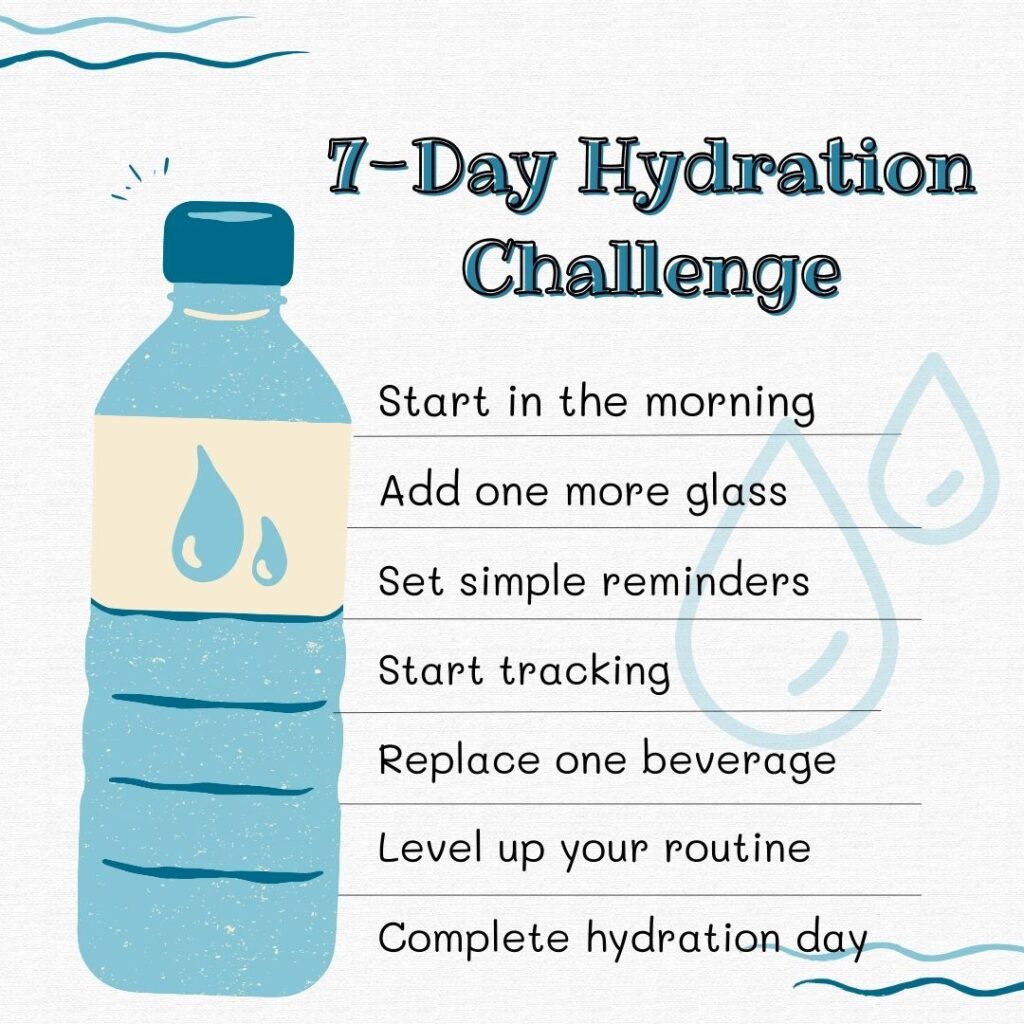
This 7-day challenge helps you increase your daily water intake in small, manageable steps. The goal is to build a consistent hydration habit without feeling overwhelmed. You can repeat the challenge each week or continue increasing your intake as needed.
Day 1 – Start in the morning
- Drink a full glass of water (about 300 ml) as soon as you wake up.
- Keep a water bottle nearby throughout the day.
- Pay attention to how often you drink water naturally, without forcing yourself.
Day 2 – Add One More Glass
- Continue with your morning glass.
- Add a second glass of water mid-afternoon.
Day 3 – Set Simple Reminders
- Drink your morning and afternoon glasses.
- Set two phone reminders (e.g., 11 AM and 4 PM) to prompt additional sips.
Day 4 – Start Tracking
- Record your water intake in a note or app.
- Aim for 4 glasses today.
- Optional: flavor one glass with lemon or cucumber to make it more enjoyable.
Day 5 – Replace One Beverage
- Replace one sugary drink, soda, or extra coffee with water.
- Set up two more reminders on your phone so you have two reminders in the morning and two in the afternoon to remind you to take more sips.
Day 6 – Level Up Your Routine
- Keep a bottle next to your workstation or living area.
- Total goal: 6 – 7 glasses.
Day 7 – Complete Hydration Day
Maintain all the habits from the previous days:
- One glass of water upon waking
- Plus two glasses of water in the morning plus two glasses of water in the afternoon
- Reminders
- Follow-up
- Try to reach 8 glasses (2 liters) or an intake that is comfortable for your body.
Attention: Excess water can be dangerous
While rare, excessive water intake over a short period can lead to hyponatremia — a dangerous drop in sodium levels in the blood. This condition is uncommon in everyday life and is usually associated with extreme physical exertion and excessive fluid intake.
Final Thoughts
Daily hydration is essential for maintaining your body’s vital functions — from physical performance to cognitive clarity and digestive health. While individual needs vary, following expert-backed guidelines and listening to your body’s thirst signals can help you stay properly hydrated every day.
Disclaimer: This article is for informational purposes only and does not replace professional medical advice, diagnosis, or treatment. Consult a qualified healthcare provider before making significant changes to your hydration or health routine.
About the Author
Sabrina Montes is a wellness content creator passionate about mindfulness, stress management, and healthy living. Through MeAcalme.com, she shares practical, research-based strategies to help readers live calmer, healthier lives.