
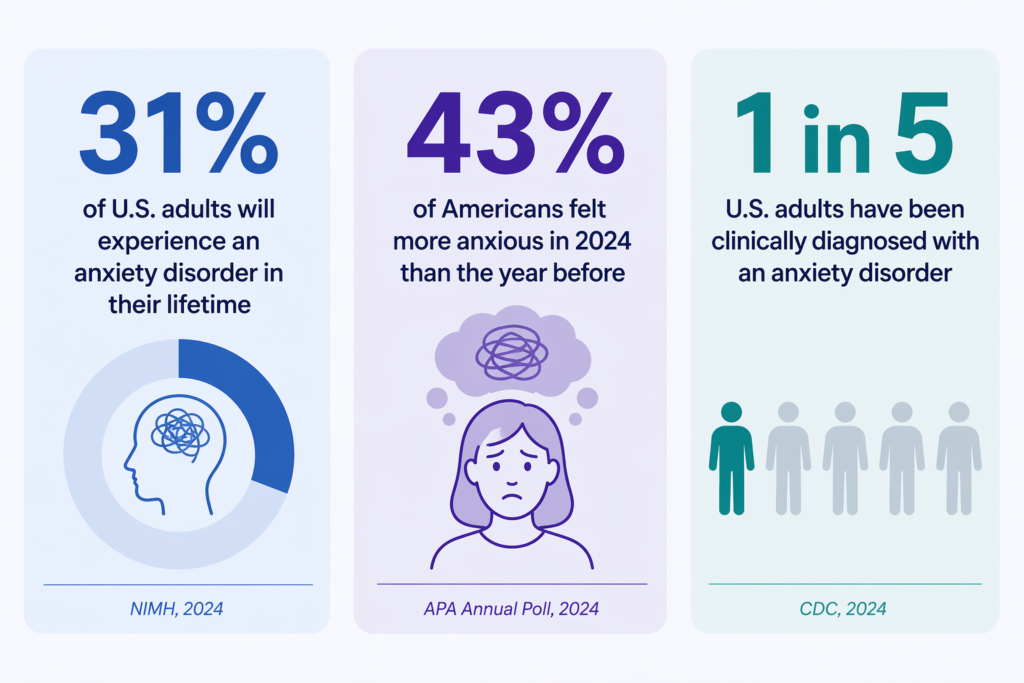
Anxiety is a natural emotional and physiological response to perceived threats or uncertainty. Rooted in the brain’s fight-or-flight mechanism, it manifests as a combination of psychological symptoms (such as excessive worry, racing thoughts, and difficulty concentrating) and physical ones (including a rapid heartbeat, muscle tension, and shallow breathing). While short-term anxiety can be adaptive, helping us stay alert and motivated, it becomes a clinical concern when it is persistent, disproportionate to the situation, and begins to interfere with daily functioning. According to the American Psychological Association (APA), anxiety disorders are the most common mental health conditions in the United States.
The good news is that anxiety can be treated and managed. Scientific understanding has never been more advanced, and there are effective strategies that do not require drastic changes. With the right tools and habits, it is possible to reduce anxiety and cultivate a calm, resilient mind.
This article brings together evidence from some of the most trusted health institutions in the United States and the United Kingdom, translating it into practical steps you can apply in your daily life.
Understanding Anxiety
Feeling anxious at certain points in life is completely normal. Feeling nervous before a job interview, anxious before an important test, or restless during periods of major change are healthy reactions that reflect how much we care about what matters to us. In these cases, anxiety is temporary, proportional to the situation, and subsides once the trigger passes.
However, anxiety becomes a clinical concern (known as an anxiety disorder) when it is persistent, excessive, and no longer linked to a specific, identifiable cause. When worry becomes constant, begins to interfere with sleep, relationships, work, or daily routines, and feels impossible to control despite your best efforts, it is a clear sign that professional support may be needed.
Consulting a licensed mental health professional, such as a psychologist or psychiatrist, is not a sign of weakness; it is one of the most important and constructive steps a person can take for their well-being.
In addition to professional treatment, there are evidence-based tools and daily habits that can significantly support recovery by helping regulate the nervous system, reduce anxiety, and build long-term emotional resilience.
Below are some of the most effective strategies.
1. Controlled Breathing: Your Fastest Tool
When anxiety spikes, breathing often becomes shallow and rapid, signaling the nervous system to release even more stress hormones. Deliberately slowing your breath interrupts this cycle and activates the parasympathetic nervous system, the body’s natural calming response.
4–7–8 Breathing: For Anxiety & Sleep
Recommended by the Cleveland Clinic; particularly effective before sleep or during anxious episodes:
- Inhale through your nose for 4 seconds
- Hold your breath for 7 seconds
- Exhale slowly through your mouth for 8 seconds
- Repeat for 3–4 cycles
A 2024 systematic review published in Frontiers in Psychology confirmed that controlled breathing techniques reduce both physiological and psychological symptoms of anxiety by activating the parasympathetic nervous system and lowering sympathetic arousal. Sessions as short as five minutes produced measurable effects.
2. Move Your Body — Even a Little
Physical exercise is one of the most well-documented non-pharmacological interventions for anxiety. It works through multiple pathways: reducing cortisol and adrenaline, increasing endorphins, enhancing serotonin availability, and providing a productive outlet for accumulated physiological tension.
Harvard Health & Mayo Clinic Consensus
According to Harvard Health Publishing, exercise reduces stress hormones while stimulating endorphins, the brain’s natural mood enhancers. The Mayo Clinic confirms that regular physical activity can improve mood, reduce restlessness, alleviate symptoms of mild anxiety, and enhance sleep quality, a major factor in anxiety regulation.
You do not need to run a marathon. Research consistently shows that even moderate activity, such as a 20-minute brisk walk, gentle yoga, or cycling, can provide meaningful relief. The key is consistency, not intensity.
Tip: Start small. If motivation is low (a common symptom of anxiety), commit to just 10 minutes. Once you begin, most people naturally continue. Even a single session can provide immediate, short-term relief before long-term benefits accumulate.
3. Reduce Hidden Amplifiers
Many everyday habits subtly worsen anxiety, not through dramatic effects, but through gradual and cumulative nervous system activation. Identifying and reducing these factors is just as important as adopting calming practices.
Common Anxiety Amplifiers
- Caffeine: Mimics stress hormones and raises baseline arousal. Individuals with anxiety are often more sensitive to its effects. The Mayo Clinic recommends monitoring intake if you experience jitteriness, a racing heart, or increased worry after consuming caffeine.
- Doomscrolling and news overconsumption: The APA’s 2024 poll found that 70% of anxious adults identified current events as a significant source of stress. Setting boundaries (such as checking the news once per day) can meaningfully reduce background anxiety.
4. Protect Your Sleep
The relationship between anxiety and sleep is bidirectional: anxiety disrupts sleep, and poor sleep intensifies anxiety. Breaking this cycle is one of the most effective ways to improve mental health.
The Sleep Foundation identifies anxiety as a leading cause of sleep disturbances in adults.
Evidence-based sleep hygiene practices:
- Maintain a consistent wake-up time, even on weekends.
- Limit screen exposure 60–90 minutes before bed (blue light suppresses melatonin).
- Keep your bedroom cool (around 65–68°F / 18–20°C), dark, and quiet.
- If you cannot sleep after 20 minutes, get up and engage in a calm activity until you feel drowsy.
- Avoid alcohol, it may help you fall asleep initially but disrupts REM sleep and increases cortisol levels.
5. Social Connection Is Essential
Humans are biologically wired for connection, and loneliness is physiologically stressful. The vagus nerve, which helps regulate the body’s relaxation response, is activated through safe social interaction, physical touch, and face-to-face communication. This is not metaphor, it is neuroscience.
Why Connection Calms
The APA identifies social support as one of the most reliable protective factors against anxiety. Strong relationships reduce perceived stress, lower cortisol responses, and create a “buffer effect,” meaning individuals with supportive social networks experience fewer and less severe anxiety episodes.
This does not require a large social circle. A brief, meaningful conversation with someone you trust (a friend, family member, therapist, or even a supportive online community) can shift your neurochemistry. If isolation is a recurring pattern, addressing it directly is as important as any other intervention on this list.
6. Practice Self-Compassion, Not Self-Criticism
Anxiety is often accompanied by a harsh inner dialogue: “I shouldn’t feel this way,” “I’m overreacting,” or “Why can’t I just be normal?” This kind of self-criticism doesn’t reduce anxiety; on the contrary, it intensifies it.
Self-compassion, treating yourself with the same kindness you would offer a friend, has been validated as an effective strategy for reducing rumination and improving emotional resilience.
When you notice self-critical thoughts, try this reframe:
“What would I say to someone I care about who feels this way?”
Then offer that same response to yourself, intentionally and sincerely.
When to Seek Professional Help
The strategies in this article are evidence-based and suitable for managing everyday anxiety. However, if anxiety significantly interferes with your work, relationships, or daily functioning, or if you experience panic attacks, phobias, or persistent intrusive thoughts, consult a licensed mental health professional.
First-line treatments for anxiety disorders include Cognitive Behavioral Therapy (CBT) —endorsed by the NHS, Mayo Clinic, and APA — and, when appropriate, medication prescribed by a psychiatrist. According to the APA, only 1 in 4 adults with anxiety seeks professional support, a gap that deserves attention.
Final Thoughts
A balanced mind is built through small, consistent actions. You do not need to overhaul your life. Anxiety responds to repetition, simple behaviors that signal safety to your nervous system over time.
Breathe. Move. Rest. Connect. Reflect. Repeat. The goal is not the absence of stress, but the ability to return to balance when it arises.
Disclaimer: The content presented in this article is intended for informational and educational purposes only and does not constitute medical advice, diagnosis, or treatment. The strategies and techniques discussed are based on publicly available research and guidance from recognized health institutions; however, they are not a substitute for professional medical or mental health care. If you are experiencing persistent, severe, or worsening symptoms of anxiety — or any other mental or physical health condition — please consult a qualified healthcare professional, such as a licensed therapist, psychologist, or physician. Never disregard professional medical advice or delay seeking it based on information you have read in this article. If you are in crisis or feel you may be in immediate danger, contact your local emergency services or a mental health crisis line right away.
About the Author
Sabrina Montes is a wellness content creator passionate about mindfulness, stress management, and healthy living. Through MeAcalme.com, she shares practical, research-based strategies to help readers live calmer, healthier lives.